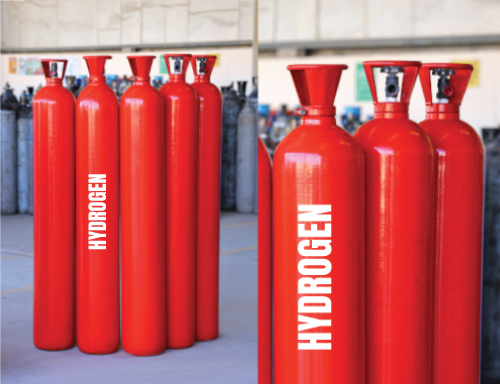
Hydrogen( H₂)
Industrial Grade
Hydrogen gas (H₂) has a range of applications across various industries, primarily due to its properties as a light, clean, and versatile element. Here are some notable applications of hydrogen gas: Hydrogen Applications:
1. Energy and Fuel:
Fuel Cells: Hydrogen is used in fuel cells to generate electricity through an electrochemical reaction with oxygen, with water as the only byproduct. This is key in powering electric vehicles (hydrogen-powered cars, buses, etc.) and providing backup power in certain applications.
Hydrogen as a Fuel: Hydrogen can be used directly as a fuel in combustion engines or burners, providing a clean energy source. It is also used in the aerospace industry for rocket propulsion. Hydrogen for Power Generation: Hydrogen can be used in thermal power plants, either by burning it directly or in gas turbines.
2. Chemical Industry:
Ammonia Production (Haber Process): Hydrogen is a key feedstock in the production of ammonia (NH₃), which is used to manufacture fertilizers, explosives, and other chemicals.Hydrocracking in Petroleum Refining: Hydrogen is used in the process of hydrocracking to break down large hydrocarbons into lighter products like gasoline and diesel.
Production of Methanol : Hydrogen is a key component in the production of methanol (CH₃OH), which is used as a feedstock for plastics, solvents, and chemicals.
3. Petrochemical Industry:
Hydrogenation: Hydrogen is used in the hydrogenation of oils and fats to convert liquid vegetable oils into solid fats (like margarine). It is also used in refining processes to remove impurities such as sulfur.
Desulfurization: Hydrogen helps remove sulfur from petroleum products to reduce sulfur emissions when fuels are burned.
4. Food Industry:
Hydrogenation of Fats and Oils: Hydrogen is used to harden edible oils, which helps preserve them and adjust their melting points. This is important for products like margarine, snacks, and processed foods.
5. Metal Industry:
Reduction of Metals: Hydrogen is used in the reduction of metals from their ores in processes like the reduction of iron ore to iron in steel production. Hydrogen acts as a reducing agent, replacing carbon (in the form of coke).
Heat Treatment: Hydrogen can be used in the heat treatment of metals to create an oxygen-free atmosphere, preventing oxidation during processes like annealing and sintering.
6. Electronics Industry:
Semiconductor Manufacturing: Hydrogen is used in semiconductor production for cleaning and etching processes, as well as in the production of certain thin-film materials.
Hydrogen Plasma: In the electronics industry, hydrogen plasma is used for cleaning surfaces, particularly in the production of LCDs and thin-film photovoltaic cells.
7. Medical Applications:
Hydrogen Inhalation Therapy: Emerging research is exploring the use of hydrogen as a potential therapeutic gas. It has been suggested that hydrogen gas could have antioxidant effects, reducing oxidative stress in the body and potentially helping with conditions like inflammation, neurodegenerative diseases, and metabolic disorders.
Hydrogen Peroxide Production: Hydrogen is also involved in the production of hydrogen peroxide (H₂O₂), which is widely used as a disinfectant, antiseptic, and bleaching agent in medical and household applications.
8. Aerospace Industry:
Rocket Fuel: Hydrogen is used as a rocket fuel, often in the form of liquid hydrogen combined with liquid oxygen (LH2/LOX). This combination provides high energy output for space missions.
Fuel for Aircraft: Research is being conducted into the use of hydrogen as a fuel for aircraft, with the goal of reducing the aviation industry's carbon footprint.
9. Glass Industry:
Oxygen-Hydrogen Torch: In the glass industry, hydrogen is used in oxy-hydrogen torches for cutting and welding glass and metal. This process produces high-temperature flames, which are ideal for shaping and processing materials.
10.Environmental Applications:
Cleaner Burning Fuels: Hydrogen can be used in internal combustion engines and power plants as a cleaner alternative to fossil fuels, producing only water vapor when burned, which reduces air pollution.
Energy Storage: Hydrogen is being explored as a potential medium for large-scale energy storage. Hydrogen can be produced when there is excess renewable energy (such as from wind or solar power) and then stored for later use.
11. Hydrogen in Metal and Semiconductor Cleaning:
Cleaning Metals: Hydrogen is used for cleaning metals in various manufacturing processes, as it can remove oxides or impurities from metal surfaces.
Etching and Cleaning of Semiconductors: In semiconductor production, hydrogen is used to etch materials and clean surfaces without leaving contaminants.
Hydrogen has a promising future as a clean and sustainable energy source, with growing interest in its use to decarbonize various sectors, including transportation, industrial processes, and power generation.
Flammable Gas
CAS No : 1333-74-0
UN No: 1049
EINECS No : 215-605-7
Molecular weight : 2.01588
Appearance : Colorless and odorless
Melting point : -259.2℃(14.01K)
Boiling point : -252.77℃(20.28K)
Density : 0.089g/L
DOT Class : 2.1


